How to Render Deer Fat Into Tallow
Most people throw the deer fat away, but it has so many uses, you should never throw it away! I like to use as much as the animal as possible, so I’m going to show you how to render deer fat into tallow, not just for cooking, but other uses as well!
Why Render Deer Fat Into Tallow?
Deer tallow has many uses, and throwing the fat away would be such a waste! Here are just some of the uses for deer tallow:
- Whipped tallow lotion
- Tallow skin balm
- Tallow soap
- Tallow candles
- Tallow leather conditioner
- Use tallow for cooking
Not everyone enjoys the taste or the mouth-feel of deer tallow, but after rendering it using the wet method, it should be taste-less and have no more scent. Some people explain the mouth-feel as waxy or film-like, but it can still be used for cooking regardless! If you don’t want to use it for cooking, it’s so easy to make skin-care or soaps using tallow, so make sure you don’t throw it away!
How to Harvest Fat From a Deer to Use for Rendering:
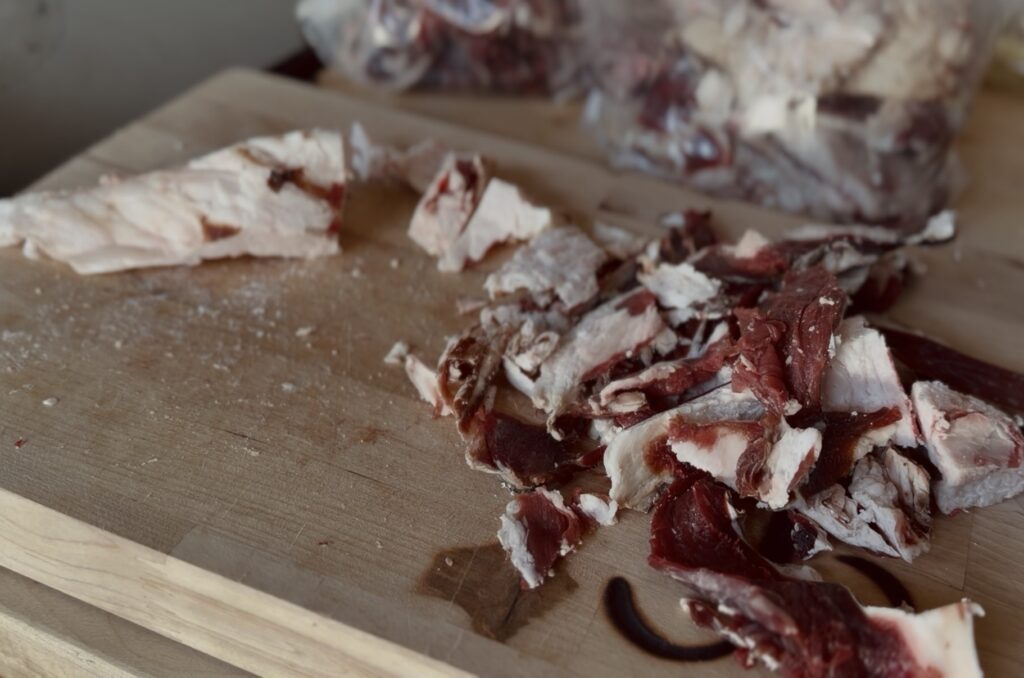
You may wonder what to do with the fat as soon as you get your deer. Cut as much of the fat off of the deer as possible, and if you are letting it hang for a few days, that’s fine too. I cut most of the fat off of my deer after it hung in a cool environment for about a week. As long as the fat is kept dry and cool, it won’t go bad right away.
When you are cutting up the deer, start cutting every bit of fat off that you can. It’s okay if it has little bits of meat here and there, but try to keep it as clean as possible. This will help with the scent of the rendering process. If you don’t plan on rendering the fat right away, make sure you put it in a bag in the freezer. It will go rancid in time if you don’t. Once you render the deer fat into tallow, it will become shelf stable indefinitely.
Tools needed for rendering deer fat into tallow:
- Knife – for trimming fat off the deer
- Crockpot or slow cooker – for the rendering process
- Immersion blender (optional) – for blending the fat during the rendering process to get the most out of it.
- Colander – for straining the rendered tallow
- Cheesecloth – to filter the rendered tallow
- Bowl – to strain the rendered tallow into
- Mason jar with a lid – for storing the rendered tallow
- Water – to help purify the tallow
- Salt – this helps cleanse the tallow of impurities
This post contains affiliate links, which means I earn a commission when you make a purchase, at no extra cost to you. Read my full affiliate link disclosure here.
Step-by-Step Instructions for Rendering Deer Fat into Tallow:
Step 1: Trim as much fat from your deer as possible. If you aren’t able to render it right now, or weren’t able to get enough, put it in the freezer until you are ready.
Step 2: Chop the fat into small pieces. The smaller the better, this will just make the rendering process go quicker.
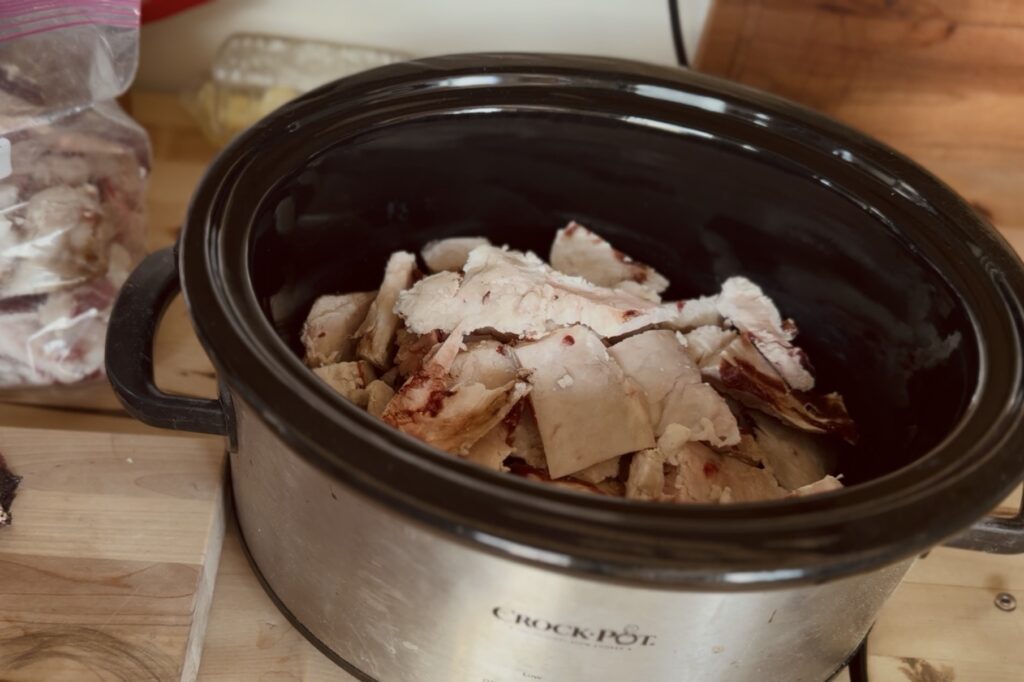
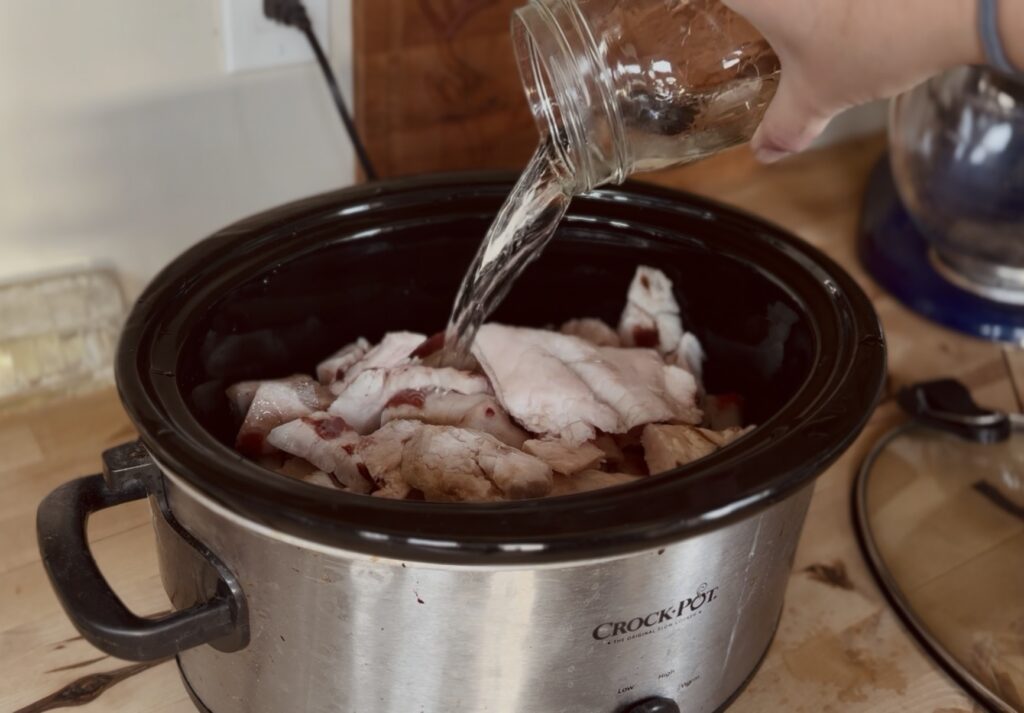
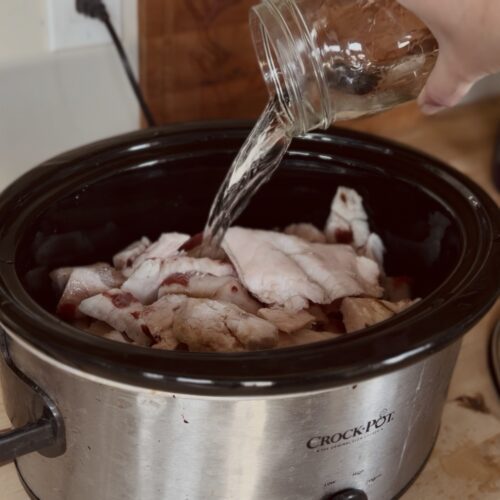
Step 3: Place your deer fat chunks into your crockpot or slow-cooker. Cover the fat with water. This not only helps purify the tallow, but also prevents it from burning to the bottom of your slow cooker. Turn the slow cooker on low and let it go for several hours.
Step 4: Come back and check on the fat after about 5-6 hours. This is when you can use the immersion blender to blend the fat more. This step is optional, but it does help you get more tallow out of the fat.
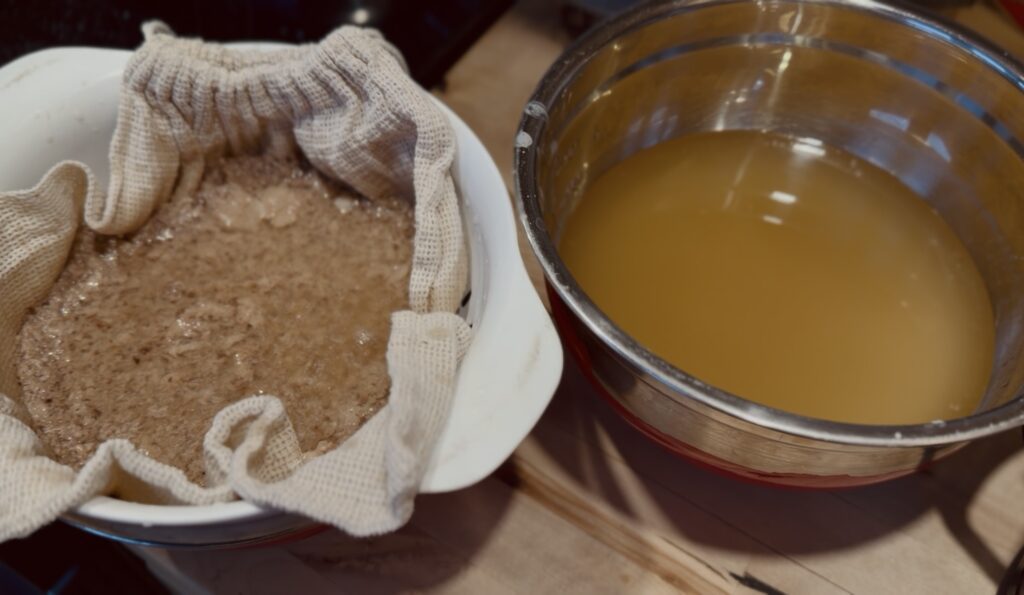
Step 5: After several hours, when the tallow appears liquid and translucent, it’s time to strain it through the cheesecloth into a bowl. Let it harden and then remove it from the bowl. The water will stay on the bottom. If it’s pure white, with no specs of meat in it and no scent, it’s ready to store. If it still has a smell, and is more of an off-white tanish color, you can repeat the rendering process by throwing it back in the crockpot with more water and letting it go a couple more hours.
Step 6: Your tallow is ready to store! Keep it in an airtight jar with a lid, and it will keep forever! As long as you make sure there is no water left in the tallow.
How to Render Deer Fat Into Tallow
Equipment
- knife for trimming fat
- Crock-pot or slow cooker for rendering tallow
- Immersion Blender optional
- Bowl to strain tallow into
- Colander for straining tallow
- Cheesecloth for straining tallow
- Jar with lid for storing tallow
Ingredients
- Deer Fat (however much you have, or whatever fits in your crock pot)
- Water (enough to cover fat)
- 1/4 cup salt (per crock pot full)
Instructions
- Trim the fat from your deer, and store it in the freezer until ready to render into tallow.
- Once you are ready to render the fat, thaw it out (if applicable) and cut it into small pieces.
- Put the pieces of fat into your crockpot, and cover them with water. Turn crockpot on low for several hours.
- When the fat has turned to liquid, and there's chunks floating around, you can use the immersion blender to blend it up even more.
- After the fat is fully translucent and has been bubbling for a couple hours, it's time to strain it through the cheesecloth into your bowl.
- Let it harden and then check to see if it is ready to store. If it's not pure white and still smells, you need to repeat the process and put it back in the crockpot with more water.
- Once it's pure white, with no specs and no smell, it's ready to store in a sealed jar!
Notes
FAQ About Rendering Deer Fat Into Tallow
How much tallow do you get from one pound of fat?
From one pound of deer fat, you should get about 1-1.5 cups of tallow.
Can you freeze fat to render later?
Yes, you can store deer fat in the freezer to be rendered at a later time.
Does tallow need to be refrigerated?
Tallow is shelf stable. As long as it was rendered properly, it does not need to be refrigerated.