How to Choose the Right Bee Feeder
It can be hard to decide how to choose the right bee feeder, but I’m going to walk you through the mosts popular types to help make your decision easier! The feeders can each serve a different purpose depending on the time of year!
Let’s Talk About How to Choose the Right Bee Feeder:
If you’re new to beekeeping, it may be overwhelming seeing all of the different bee feeder options. This can make it hard for you to figure out which one you should be using. There are many different feeders that work well for different parts of the year. Below I’ve listed the most common types of bee feeders. Hopefully this will help you choose the right bee feeder.
Entrance Feeder:
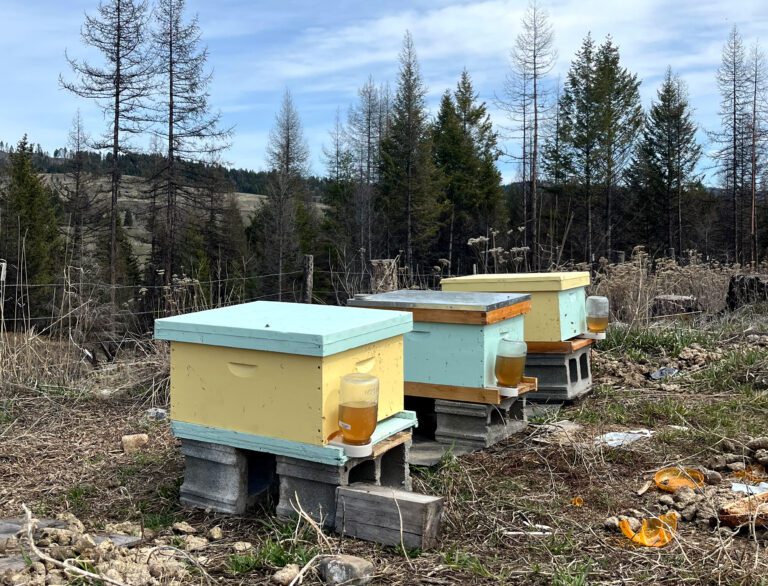
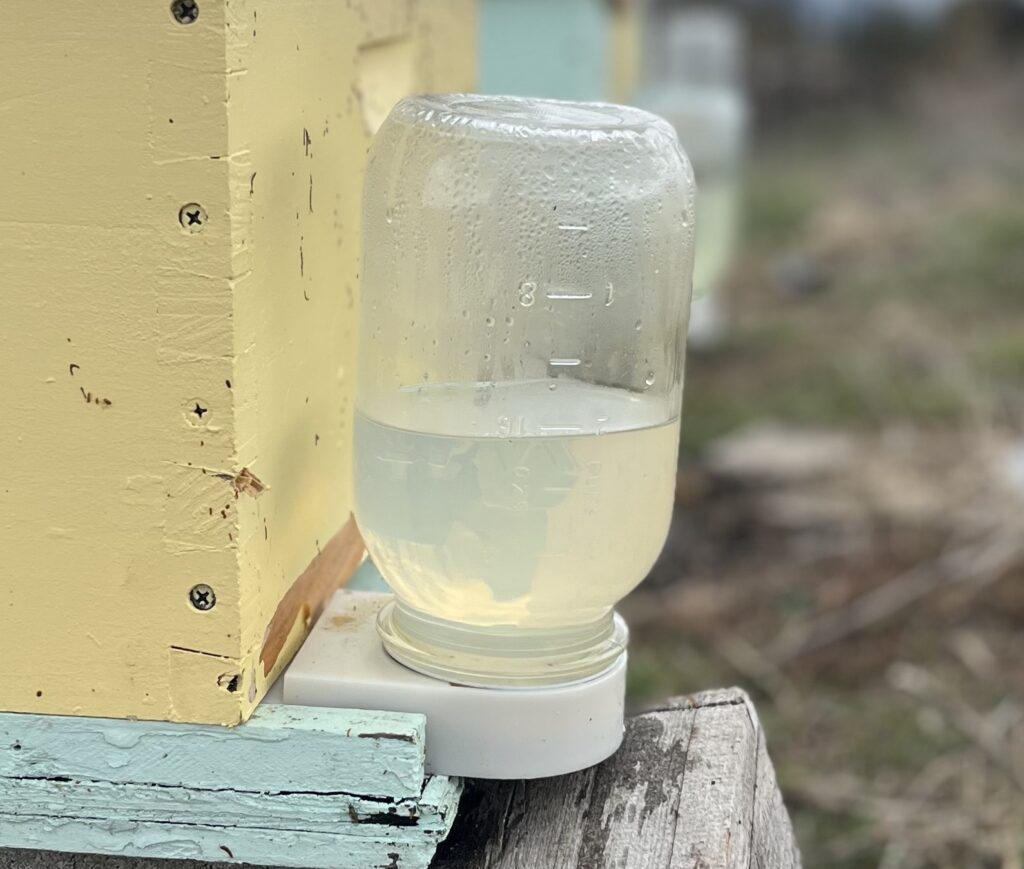
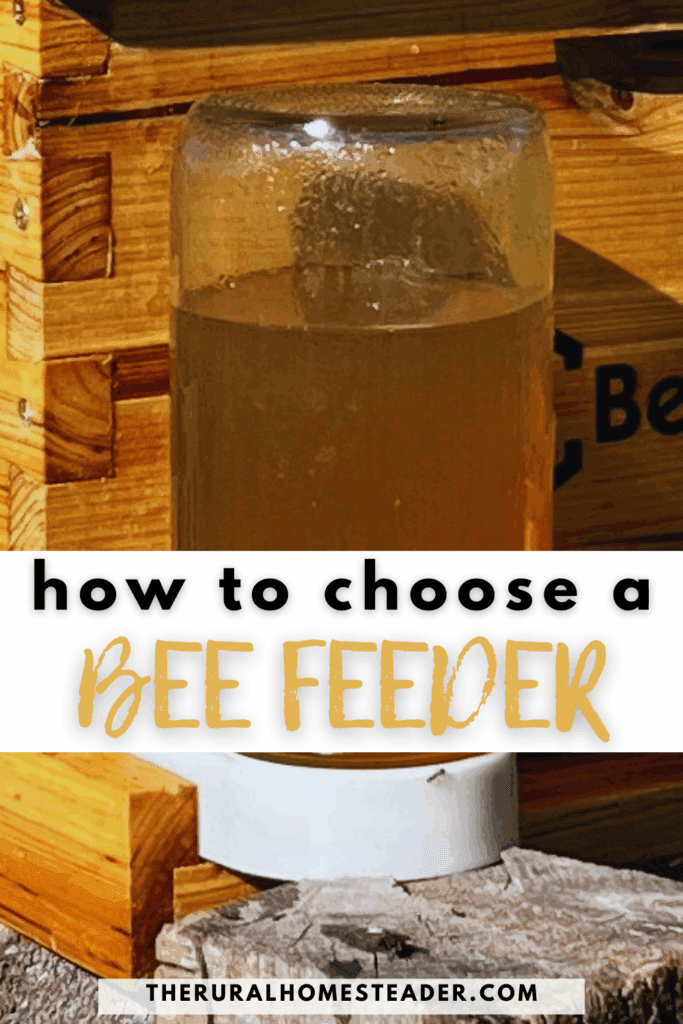
These are one of the most common bee feeders I see people using. They are typically a mason jar with a special lid that inserts into the entrance of the hive. There are plastic ones available as well if you don’t have any mason jars. Entrance feeders are nice because it’s easy to see when it’s time to refill the feeder. It’s best to use entrance feeders during the spring, but as soon as robbing season comes around later in the summer, it would be a good idea to get rid of these feeders and switch to an inner feeder. Otherwise, robbers will be attracted to the entrance of the beehives.
Inner Hive Feeder:
There are several different types of inner-hive feeders. These are the main ones: frame feeders, gallon feeders, top feeders, and candy boards. Candy boards are more of a long-term feeder that people use in the winter time to make sure the bees have back-up if they run out of honey, so they aren’t really a feeder you would normally use. My personal favorite feeder for robbing season, is the gallon feeders.
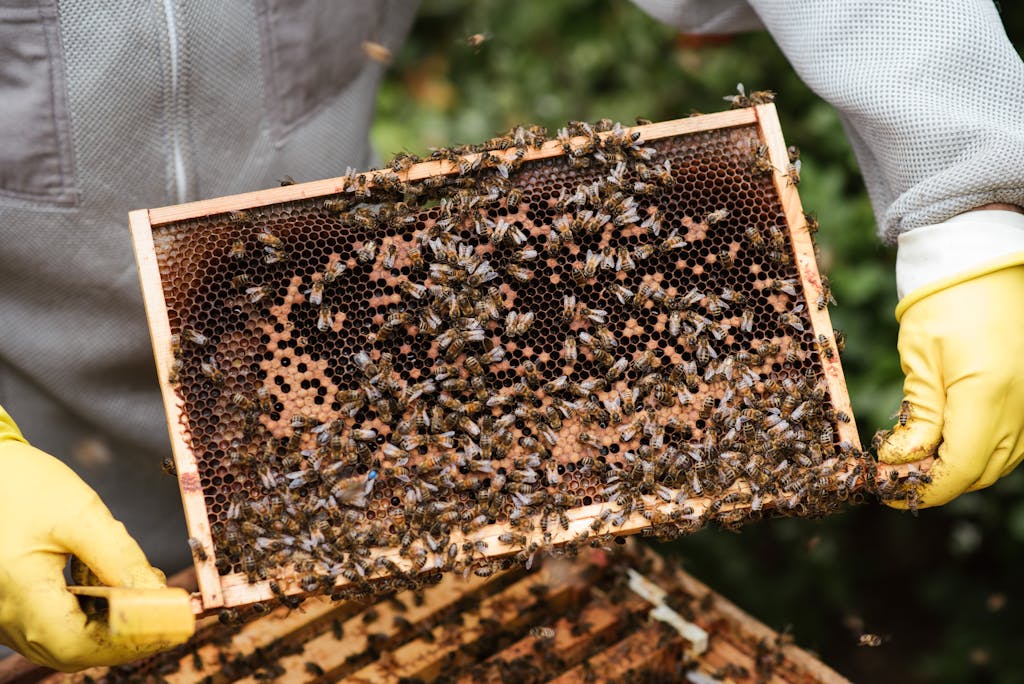
A lot of people like frame feeders, because they don’t require having an extra box on top of the hive. There can be some drawbacks to using this type of feeder. One is that it takes up the space of almost two frames. Another drawback is that you have to disrupt the hive a lot more to replace these feeders. With a box feeder or gallon feeder, you just replace it in the top box without removing any frames. You can always refill the feeder with a pitcher, but I like to remove my feeders and thoroughly clean them after each use. They tend to get really dirty and start growing mold.
Outer Hive Feeders:
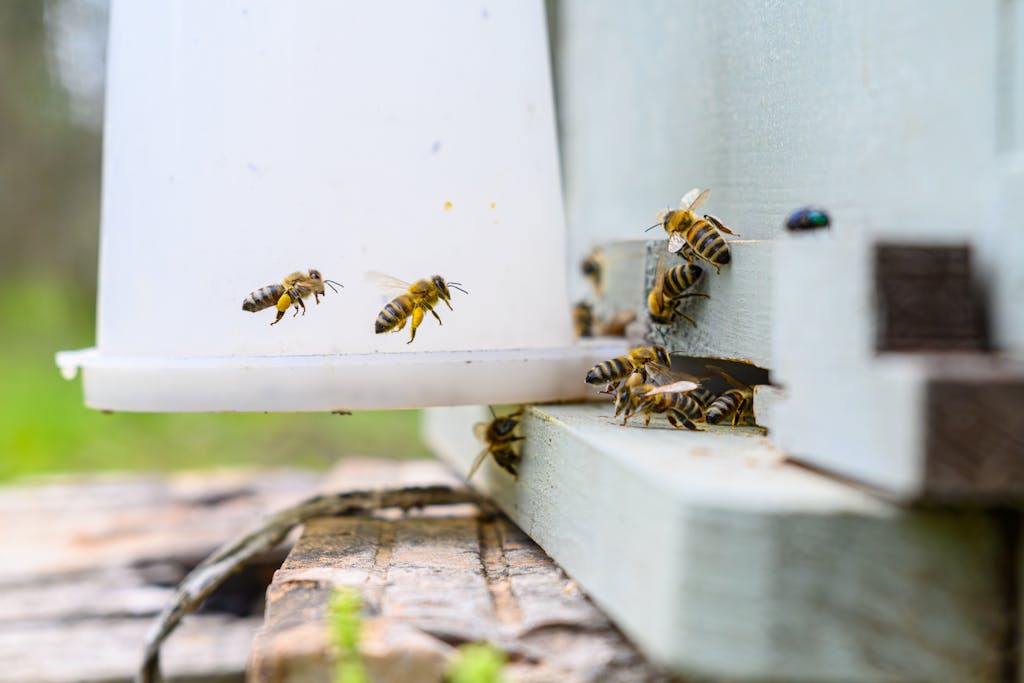
Some people also like to feed their bees outside of the hive, which can have some positives and negatives. You can use this feeding dish for making watering stations, and feeding stations in your yard. If you are doing this, you could also be feeding wild bees. There is potential for your bees to bring home mites or other diseases from wild bees. But if you think about it, they could be sharing food sources like this with wild bees elsewhere, so in my opinion it’s not that big of a deal. The bees could be building their immunity by being exposed to more wild bees. One thing that is positive about feeding this way, is this will keep robbers away from your hive. Therefore, you are protecting your bees.
This post contains affiliate links, which means I earn a commission when you make a purchase, at no extra cost to you. Read my full affiliate link disclosure here.
Conclusion on How to Choose the Right Bee Feeder:
There are many different types of feeders, and each of them serve different purposes. As I mentioned before, entrance feeders are convenient. They work great for the times of year when you don’t have to worry about robbing. My favorite entrance feeders are simply just a mason jar with the feeder lid. The glass jars last a lot longer than the plastic ones. It makes it a cheap and effective feeder for the bees!
During robbing season it’s best to switch to a feeder that is secure inside of the hive. Otherwise it could attract robbers to the entrance of the hive. Robber bees can take out an entire hive, especially if it isn’t well established, So, it’s important to use one of the inner feeders as a measure of protection.
In the winter time, your best bet is to use a candy board, on top of all the honey your bees save up. This can ensure they don’t run out of food and end up starving to death! Candy boards are made using a special board with mesh that goes on top of the frames on your hive. A simple mixture of sugar and a little bit of water is all you need. You can add some Honey-B-Healthy, or another natural bee supplement to it as well if you’d like!
I hope this article has helped you better understand the main types of bee feeders, and helped you decide which one will work best for you and your bees! If you have any questions, drop them down below and I will do my best to answer them!
FAQ About Bee Feeders
Which bee feeder is best to use in the spring?
You can use any of the bee feeders in the spring, but personally I like entrance feeders because they are convenient, and you don’t have to worry about robbing in the spring.
Can I use entrance feeders in the winter?
It depends on where you live, but where I live the bees don’t move around much in the winter, and it stays below freezing for months at a time, so we use a candy board in the winter on top of the honey the bees save up.
When should I fill my bee feeder?
Depending on the time of year and the size of your hive, the bees can go through a quart sized jar of syrup in a few days, to around a week. If using an entrance feeder, keep an eye on it every couple days.